Traveling to East Africa offers an opportunity to encounter some of the world’s most vibrant and enduring cultures. Among the most well-known indigenous communities in the region are the Maasai people, a pastoral society living primarily in southern Kenya and northern Tanzania.
Many visitors traveling to wildlife destinations such as the Maasai Mara National Reserve or Serengeti National Park also take part in cultural tours that introduce them to Maasai traditions, daily life, and community values.
During typical village visits, travelers are often welcomed by local guides, shown traditional homes called manyattas, and invited to observe cultural practices such as beadwork or the famous jumping dance. These experiences can be fascinating and educational—but they are most meaningful when visitors approach them with respect and cultural understanding.
This guide explains the key aspects of Maasai culture, including their traditions, social structure, ceremonies, and the etiquette travelers should follow when visiting a Maasai community.
Who Are the Maasai?
The Maasai are a semi-nomadic ethnic group known for their strong pastoral traditions and distinctive cultural identity. Their communities have historically lived across the Great Rift Valley region of East Africa.
For centuries, the Maasai economy and social system have been centered around cattle herding. Livestock provides food, wealth, and cultural identity.
The Maasai are widely recognized for several cultural traditions:
- Bright red garments called shúkà
- Elaborate beadwork jewelry
- Traditional warrior culture
- Communal village life
- Deep spiritual connections to land and livestock
Despite modernization across East Africa, many Maasai communities continue to preserve important cultural practices while also adapting to education, tourism, and modern technology.
Anthropologists studying East African pastoral cultures note that Maasai traditions remain one of the most well-documented indigenous cultural systems in the region.
Why Cattle Are Central to Maasai Culture
Cattle hold deep economic, social, and spiritual importance in Maasai society.
According to traditional beliefs, cattle were entrusted to the Maasai by their deity Enkai, making livestock not only a livelihood but also a sacred responsibility.
Cattle provide many essential resources:
- Milk, a major daily food source
- Meat, consumed mainly during ceremonies
- Economic value, used for trade and dowries
- Social status, representing family wealth
Historically, a family’s prosperity was often measured by the size of its herd.
During village visits, travelers may notice cattle kept in central enclosures within the settlement. These areas are carefully protected at night from predators using thorn fences.
Researchers from the Smithsonian Institution and various anthropological studies have documented the importance of livestock in Maasai culture and pastoral economies.
Traditional Maasai Clothing and Beadwork
One of the most recognizable aspects of Maasai culture is their colorful clothing and jewelry.
Visitors arriving at Maasai villages often immediately notice vibrant red garments and intricate bead necklaces worn by community members.
The Shúkà
The traditional cloth worn by many Maasai is called a shúkà. Red is the most iconic color and is widely associated with strength and protection. However, blue, purple, and patterned fabrics are also common today.
Modern Maasai clothing sometimes blends traditional and contemporary styles, reflecting the community’s ability to adapt while preserving cultural identity.
Maasai Beadwork
Maasai beadwork is both artistic and symbolic.
Women traditionally create detailed jewelry pieces including:
- Necklaces
- Bracelets
- Earrings
- Decorative collars
The colors used in beadwork often carry cultural meaning:
- White – purity and milk
- Blue – the sky and rain
- Red – bravery and unity
- Green – land and health
Visitors often see artisans crafting beadwork during village tours. Purchasing handmade jewelry directly from artisans can help support local families and community initiatives.
Organizations such as the United Nations Educational, Scientific and Cultural Organization have highlighted beadwork as an important form of cultural expression among East African pastoral communities.
The Maasai Age-Set System and Warriors
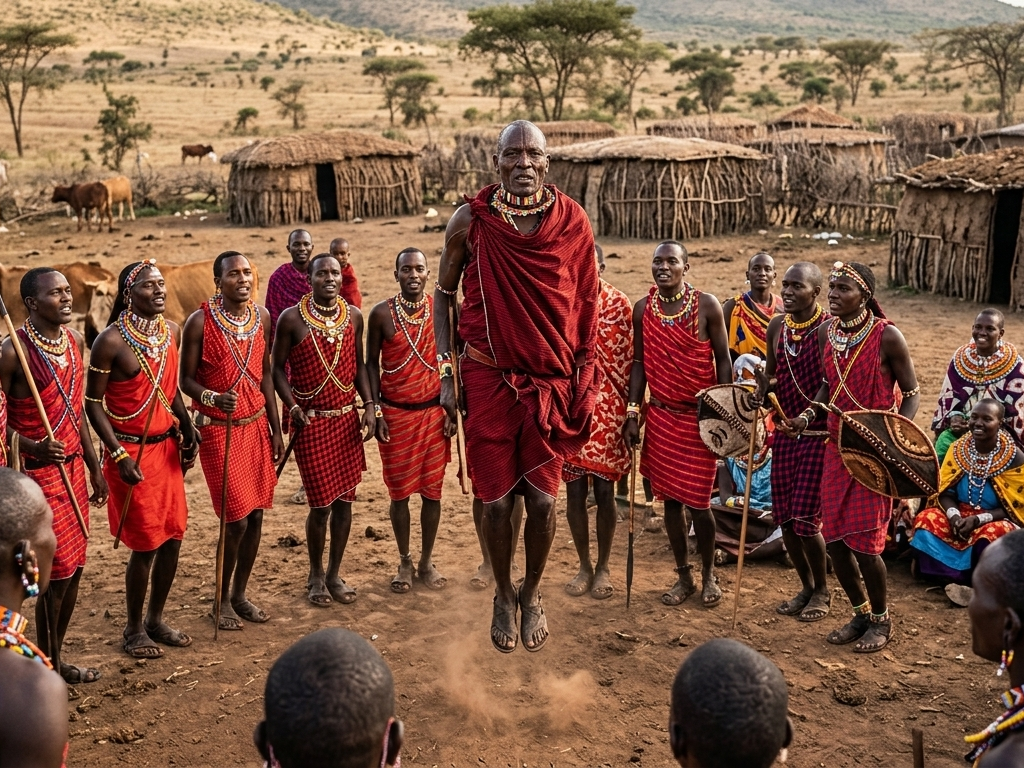
Maasai society is organized through a structured age-set system, where groups of men pass through life stages together.
Each stage carries specific social roles and responsibilities.
Children
Children learn essential skills from a young age, including caring for livestock and participating in community activities.
Warriors (Morans)
Young men become warriors, known as morans, after initiation ceremonies.
Historically, morans were responsible for protecting the community and livestock. Today their role is largely symbolic but remains culturally important.
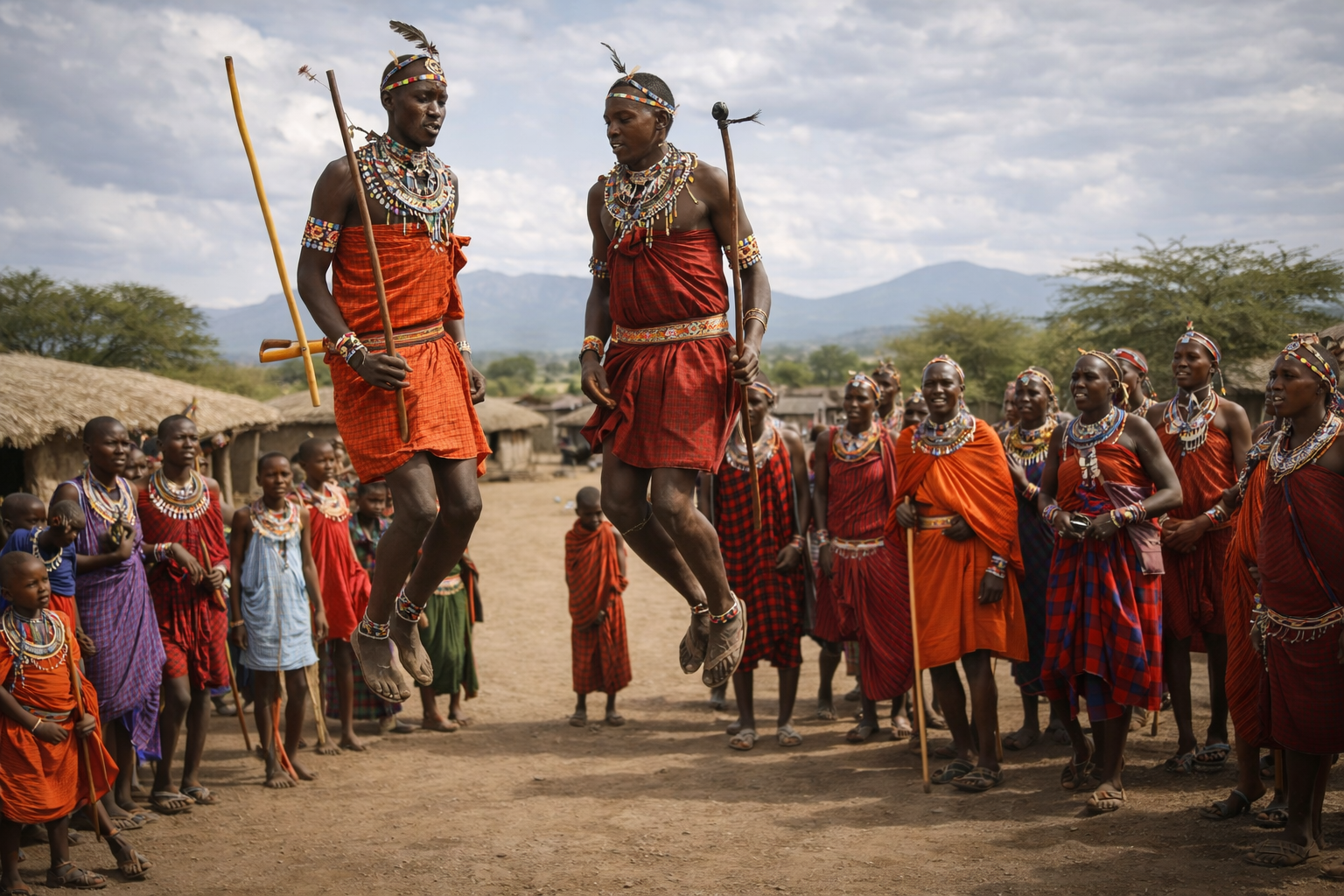
One of the most famous traditions associated with morans is the Adumu jumping dance, where warriors leap vertically into the air during ceremonies or cultural performances.
Visitors attending cultural tours often observe this dance as part of village demonstrations.
Elders
Elders hold significant authority in Maasai society.
They make important decisions, mediate disputes, and preserve oral traditions passed down through generations.
Understanding this leadership structure helps travelers appreciate how respect and authority operate within Maasai communities.
Traditional Maasai Villages (Manyattas)
Maasai settlements are commonly called manyattas.
These villages typically have a circular design with homes arranged around a central livestock enclosure.
Manyatta houses are traditionally built by women using natural materials such as:
- Mud
- Sticks
- Grass
- Cow dung
The structures are designed to provide insulation and protection from weather.
During village tours, travelers are sometimes invited to step inside a traditional house to see how families live and cook.
Because these homes are small and functional, visitors should follow the instructions of guides and avoid entering homes without permission.
Important Maasai Ceremonies
Ceremonies play a central role in Maasai cultural life and often mark major life transitions.
Some of the most important ceremonies include:
Initiation Ceremonies
These mark the transition from childhood to adulthood and involve community celebrations.
Marriage Traditions
Marriage often involves negotiations between families and the exchange of livestock or gifts.
Eunoto Ceremony
The Eunoto ceremony marks the transition of warriors into elderhood. It is one of the most important cultural milestones in Maasai society.
Visitors rarely attend these ceremonies unless invited by the community.
Anthropologists and cultural researchers have documented these traditions extensively in studies of East African pastoral societies.
What to Expect When Visiting a Maasai Village
A typical Maasai cultural visit often includes several activities designed to introduce visitors to local traditions.
While experiences vary by community, many tours include:
- A welcome greeting from community members
- Demonstrations of the Adumu jumping dance
- A guided tour of the village and homes
- Cultural explanations from a local guide
- An opportunity to buy handmade beadwork
These visits usually last between 30 minutes and 2 hours.
Responsible tourism programs ensure that the community receives a fair share of the income generated from cultural tours.
Cultural Etiquette for Travelers
Respectful behavior is essential when visiting indigenous communities.
Here are important guidelines for travelers.
Ask Before Taking Photos
Photography is one of the most sensitive issues during village visits.
Always ask permission before taking photos of individuals. In some communities, people may request a small payment for photographs.
Dress Modestly
While visitors are not expected to wear traditional clothing, modest attire is appreciated when visiting rural villages.
Follow Your Guide’s Instructions
Local guides understand the customs and expectations of the community.
Following their instructions helps avoid misunderstandings.
Respect Cultural Traditions
Remember that Maasai villages are living communities, not tourist attractions. Treat the experience as a cultural exchange rather than a performance.
Tourism and the Maasai Community
Tourism plays an important role in the economies of many Maasai communities, particularly those living near major wildlife reserves.
Cultural tourism can help support:
- Education programs
- Healthcare access
- Community development projects
- Artisan businesses
However, poorly managed tourism can sometimes create challenges, including cultural commercialization or unequal profit distribution.
Responsible tourism organizations encourage visitors to support community-run cultural programs whenever possible.
Conservation groups working near the Maasai Mara National Reserve have developed programs that combine wildlife conservation with community economic development.
How Modern Life Is Changing Maasai Culture
Like many indigenous societies, the Maasai are navigating the balance between tradition and modernization.
Today, many Maasai individuals pursue:
- formal education
- careers in government and conservation
- entrepreneurship
- political leadership
At the same time, environmental pressures such as drought, land access, and climate change continue to affect pastoral lifestyles.
Understanding these changes helps travelers recognize that Maasai culture is dynamic and evolving rather than fixed in the past.
Why Cultural Awareness Matters for Travelers
Cultural awareness allows travelers to experience destinations more meaningfully.
When visitors approach Maasai communities with curiosity and respect, they can:
- learn directly from local traditions
- support community livelihoods
- build positive cultural exchanges
- appreciate the diversity of human cultures
Responsible travel helps ensure that indigenous communities benefit from tourism while maintaining control over their traditions and heritage.
Conclusion
The culture of the Maasai people remains one of the most recognizable cultural traditions in East Africa.
From their vibrant clothing and beadwork to their pastoral lifestyle and ceremonial traditions, Maasai culture reflects centuries of resilience and adaptation.
For travelers visiting destinations in Kenya and Tanzania, learning about Maasai customs before arriving can enrich the experience and encourage respectful interactions.
By supporting community-based tourism, asking permission when appropriate, and approaching cultural visits with genuine interest, travelers can help ensure that these cultural encounters remain positive for both visitors and the communities who host them.