Few cities capture the energy and ambition of modern Africa quite like Lagos, Nigeria’s largest city and one of the fastest-growing urban centers in the world.
Table of Contents
ToggleLocated along the Atlantic coast of southwestern Nigeria, Lagos has transformed from a historic trading port into a sprawling mega-city that influences business, culture, technology, and entertainment across the continent.
According to estimates from the United Nations, the Lagos metropolitan area is home to more than 20 million people, making it one of the largest urban areas in Africa. The city also contributes a significant share of Nigeria’s economic output, with industries ranging from finance and technology to shipping and film production.
For visitors and residents alike, Lagos offers a fascinating mix of modern development, traditional culture, busy markets, and lively coastal neighborhoods. From tech startups in Victoria Island to street food stalls in Surulere, daily life in Lagos reflects both rapid urban growth and deep cultural heritage.
This guide explores Lagos’ history, economy, culture, and everyday experiences while offering practical insights for anyone interested in exploring Africa’s most vibrant mega-city.
The Historical Roots of Lagos
Understanding Lagos begins with its early history. The city originally developed as a Yoruba settlement known as Eko, located on islands and coastal areas along the Lagos Lagoon.
In the 15th century, Portuguese traders arrived along the West African coast and began trading in the region. They later referred to the area as Lagos, a name that eventually became widely adopted.
By the 19th century, Lagos had grown into a major port for regional and international trade. In 1861, the city became a British colony, and in 1914 it was designated the capital of colonial Nigeria.
Lagos remained Nigeria’s capital until 1991 when the federal government moved to Abuja. Despite losing political capital status, Lagos continued to expand economically and culturally.
Today, historic neighborhoods such as Lagos Island still preserve elements of the city’s past through colonial-era buildings, traditional markets, and cultural festivals.
Lagos: Nigeria’s Economic Powerhouse
Lagos is widely regarded as the commercial heart of Nigeria and one of Africa’s most important financial centers.
According to economic research published by the World Bank, Lagos accounts for a large portion of Nigeria’s non-oil economic activity and hosts thousands of businesses across multiple industries.
Major Business Districts
Several areas of Lagos serve as major financial and commercial hubs.
Victoria Island
Victoria Island is one of Lagos’ primary financial districts. The area contains corporate headquarters, luxury hotels, embassies, and major banks.
Ikoyi
Ikoyi is known for its high-end residential neighborhoods, diplomatic offices, and upscale restaurants.
Lekki
Lekki has experienced rapid development over the past decade and now hosts tech companies, residential estates, and new infrastructure projects.
These districts represent the city’s growing global connections and expanding middle class.
Africa’s Fast-Growing Technology Hub
In recent years, Lagos has become one of Africa’s leading centers for technology startups and digital entrepreneurship.
The city has earned the nickname “Silicon Lagoon” due to the concentration of tech companies and venture capital investment.
Several globally recognized startups originated in Lagos, including:
- Flutterwave – a digital payments platform used by businesses worldwide
- Paystack – a fintech company acquired by Stripe in 2020
- Andela – a technology talent company connecting African developers with global companies
Reports from Partech, a venture capital firm that tracks African tech investment, consistently rank Lagos among the top cities for startup funding on the continent.
Young entrepreneurs, software developers, and investors continue to drive innovation in financial technology, logistics platforms, and digital commerce.
Culture and Entertainment: The Heartbeat of Lagos
Beyond business and technology, Lagos is widely recognized as one of Africa’s most influential cultural capitals.
Music and Creative Arts
Lagos plays a central role in the global rise of Afrobeats music. Internationally recognized artists such as Burna Boy and Wizkid built much of their early careers in the city’s music scene.
Recording studios, live performance venues, and nightclubs across Lagos regularly host concerts and cultural events that attract both local fans and international visitors.
The city is also the center of Nollywood, Nigeria’s film industry, which produces thousands of movies each year and ranks among the largest film industries in the world by volume.
Creative professionals in Lagos work across multiple industries including:
- film production
- fashion design
- photography
- digital media
- visual arts
Cultural Festivals and Traditions
Traditional celebrations remain an important part of Lagos culture.
One of the most famous is the Eyo Festival, a historic Yoruba cultural event known for its striking white robes and ceremonial processions through the streets of Lagos Island.
During the festival, participants known as “Eyo masquerades” perform traditional dances while crowds gather to celebrate Yoruba heritage and community traditions.
Events like these highlight the city’s ability to preserve cultural identity while continuing to modernize.
Iconic Places to Visit in Lagos
For travelers and explorers, Lagos offers a wide variety of attractions ranging from beaches to museums.
Beaches Along the Atlantic Coast
Because Lagos lies along the Atlantic Ocean, several beaches attract visitors throughout the year.
Popular destinations include:
- Tarkwa Bay Beach
- Elegushi Beach
- Oniru Beach
Tarkwa Bay is particularly popular because it is accessible mainly by boat, which creates a more relaxed atmosphere compared to the busy mainland beaches.
On weekends, visitors often gather for beach football, live music, and grilled seafood prepared by local vendors.
Museums and Historical Sites
Visitors interested in Nigerian history can explore several cultural institutions, including the National Museum Lagos, which houses artifacts, sculptures, and historical exhibits related to Nigeria’s cultural heritage.
The museum provides insight into traditional art, ancient kingdoms, and Nigeria’s journey through colonial history to independence.
Famous Markets and Shopping Areas
Markets are an essential part of everyday life in Lagos and offer visitors a chance to experience the city’s vibrant street commerce.
Some of the best-known markets include:
- Balogun Market
- Lekki Arts and Crafts Market
- Oshodi Market
Walking through Balogun Market on Lagos Island can be an intense but fascinating experience. The narrow streets are filled with traders selling textiles, electronics, and clothing while shoppers bargain energetically over prices.
Everyday Life in Lagos
Life in Lagos moves quickly, shaped by both opportunity and the challenges of living in a massive urban environment.
Transportation and Traffic
Getting around Lagos requires patience and planning.
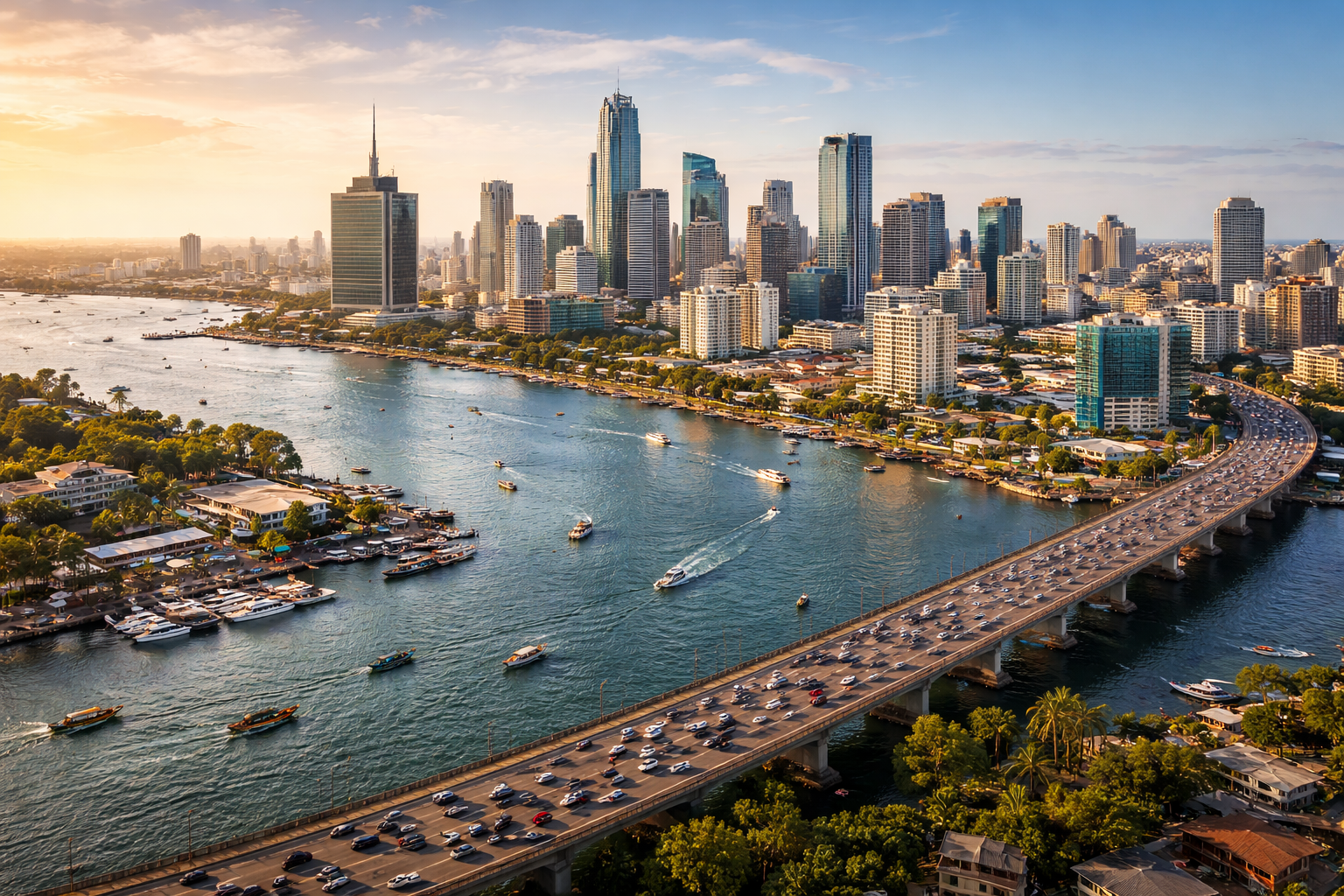
Major routes such as the Third Mainland Bridge, one of Africa’s longest bridges, connect mainland districts with Lagos Island and Victoria Island.
During weekday mornings and evenings, heavy traffic can significantly extend travel times.
Many residents rely on ride-hailing services like Uber and Bolt, while others use public minibuses locally known as “danfo.”
Food and Local Cuisine
Food is an essential part of Lagos culture, and the city offers everything from street vendors to upscale restaurants.
Popular Nigerian dishes include:
- Jollof rice
- Suya (spiced grilled meat)
- Pounded yam with soup
- Fried rice with plantains
Even late at night, many Lagos neighborhoods remain active with roadside food stalls serving grilled meat, rice dishes, and snacks.
Opportunities and Challenges of a Growing Mega-City
Lagos continues to expand rapidly as people from across Nigeria and West Africa move to the city in search of economic opportunities.
However, this rapid population growth also creates challenges related to infrastructure, housing, and transportation.
To address these issues, the Lagos State Government has launched major infrastructure initiatives including new transportation systems, highway expansion projects, and urban development plans.
One of the most ambitious projects is Eko Atlantic, a large coastal city development being built on reclaimed land along the Atlantic Ocean.
Best Time to Visit Lagos
Lagos has a tropical climate with two main seasons:
- Dry season (November–March) – generally considered the best time to visit due to lower rainfall
- Rainy season (April–October) – heavier rains but cooler temperatures
Visitors often prefer the dry season when outdoor activities such as beach trips and festivals are easier to enjoy.
Why Lagos Continues to Inspire
Despite its challenges, Lagos remains a city defined by creativity, resilience, and opportunity.
Entrepreneurs launch startups, musicians create global hits, and artists shape cultural trends that spread far beyond Nigeria’s borders.
For travelers, Lagos offers an unforgettable combination of urban energy, cultural depth, and coastal beauty.
Conclusion
Lagos stands as one of Africa’s most influential and dynamic cities. Its blend of history, economic opportunity, cultural creativity, and rapid urban growth makes it a unique destination on the global stage.
From the business towers of Victoria Island to the busy markets of Lagos Island and the beaches along the Atlantic coast, the city offers countless experiences for visitors and residents alike.
For anyone interested in understanding the pulse of modern Africa, Lagos remains a city worth exploring.