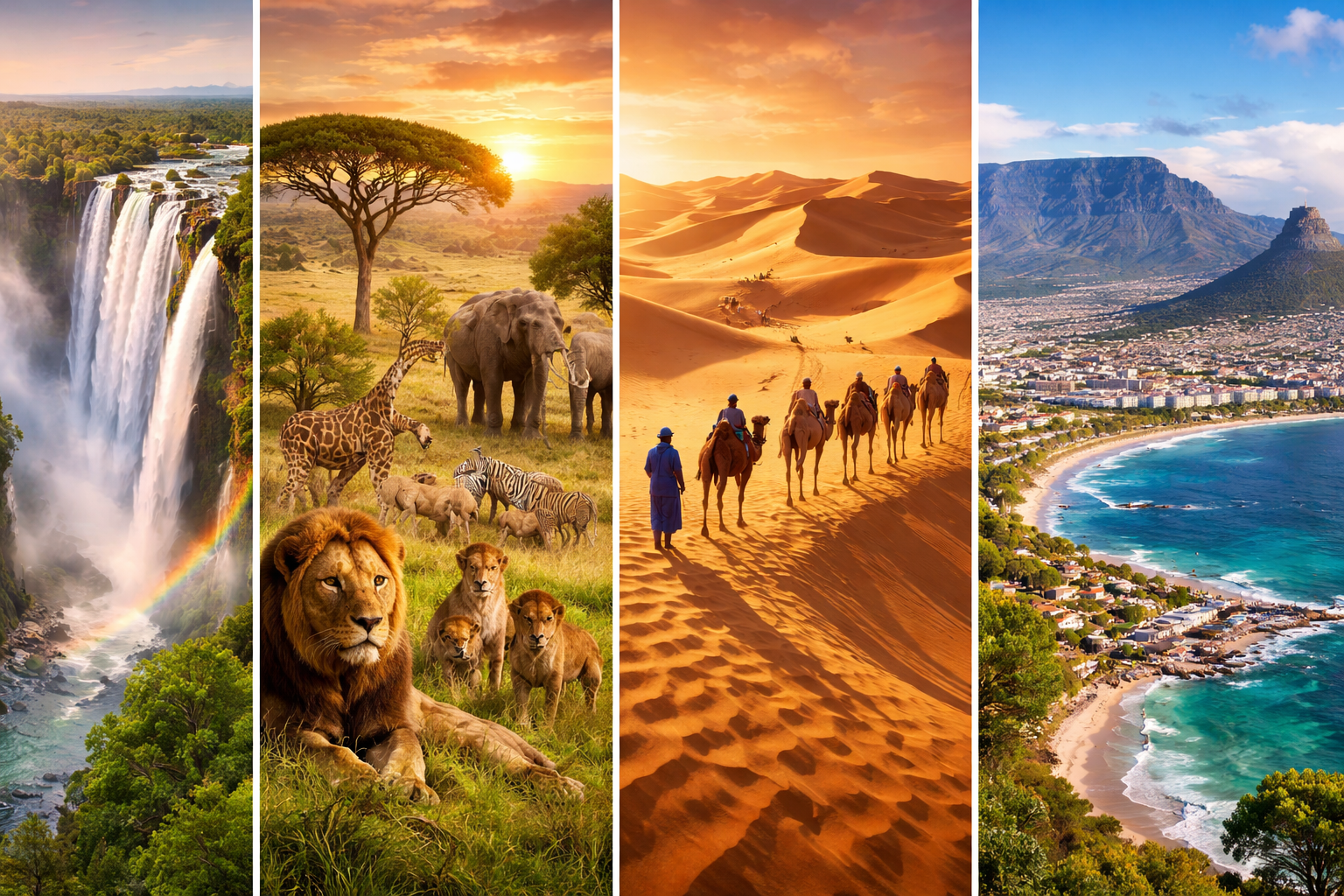
Africa is often associated with iconic destinations like the Serengeti or Table Mountain. Yet beyond these well-known landmarks lies a collection of extraordinary places that receive a fraction of the international attention — despite offering equally powerful travel experiences.
After years of studying African travel routes, tourism trends, and conservation landscapes — and consulting official park authorities, UNESCO listings, and regional tourism data — I’ve found that some of the most rewarding journeys on the continent happen far from the busiest circuits.
This guide highlights lesser-visited destinations that combine geological uniqueness, ecological importance, and deep cultural heritage — while also providing the logistical clarity serious travelers need.
Why Travel Beyond Africa’s Main Tourist Circuits?
According to the UN World Tourism Organization (UNWTO), tourism in Africa remains heavily concentrated in a small number of countries and flagship attractions. This means:
- Many ecosystems receive minimal visitor pressure.
- Cultural heritage sites remain under-interpreted internationally.
- Economic benefits are unevenly distributed.
Traveling to lesser-known regions can:
- Support conservation outside flagship parks
- Strengthen community-based tourism initiatives
- Reduce overtourism impact in high-traffic areas
- Offer more intimate wildlife and cultural encounters
However, remote destinations require more planning. Infrastructure may be limited, and independent travel can be logistically complex. Below, each location includes practical planning insights.
1. Lake Assal, Djibouti
Africa’s Lowest Point
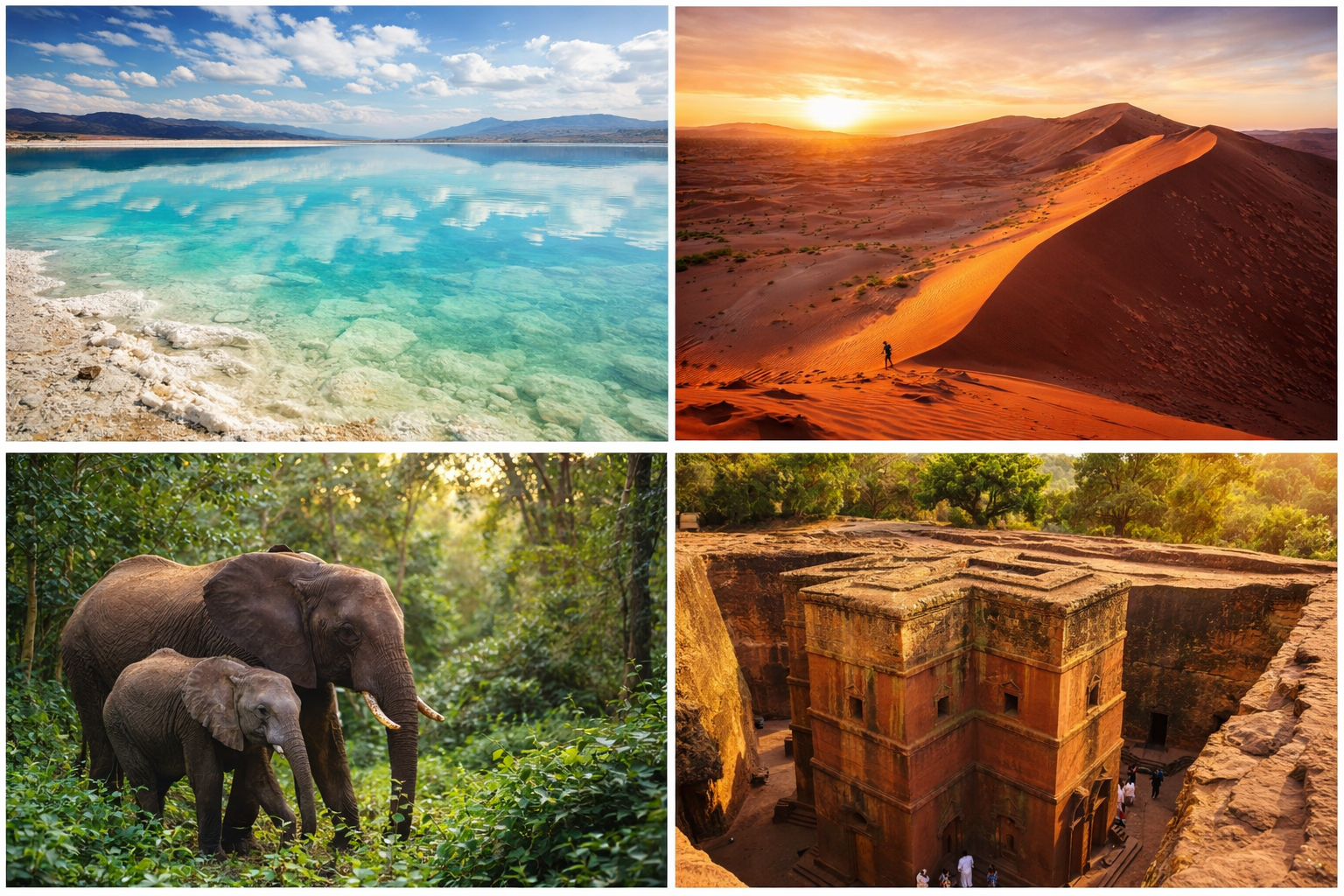
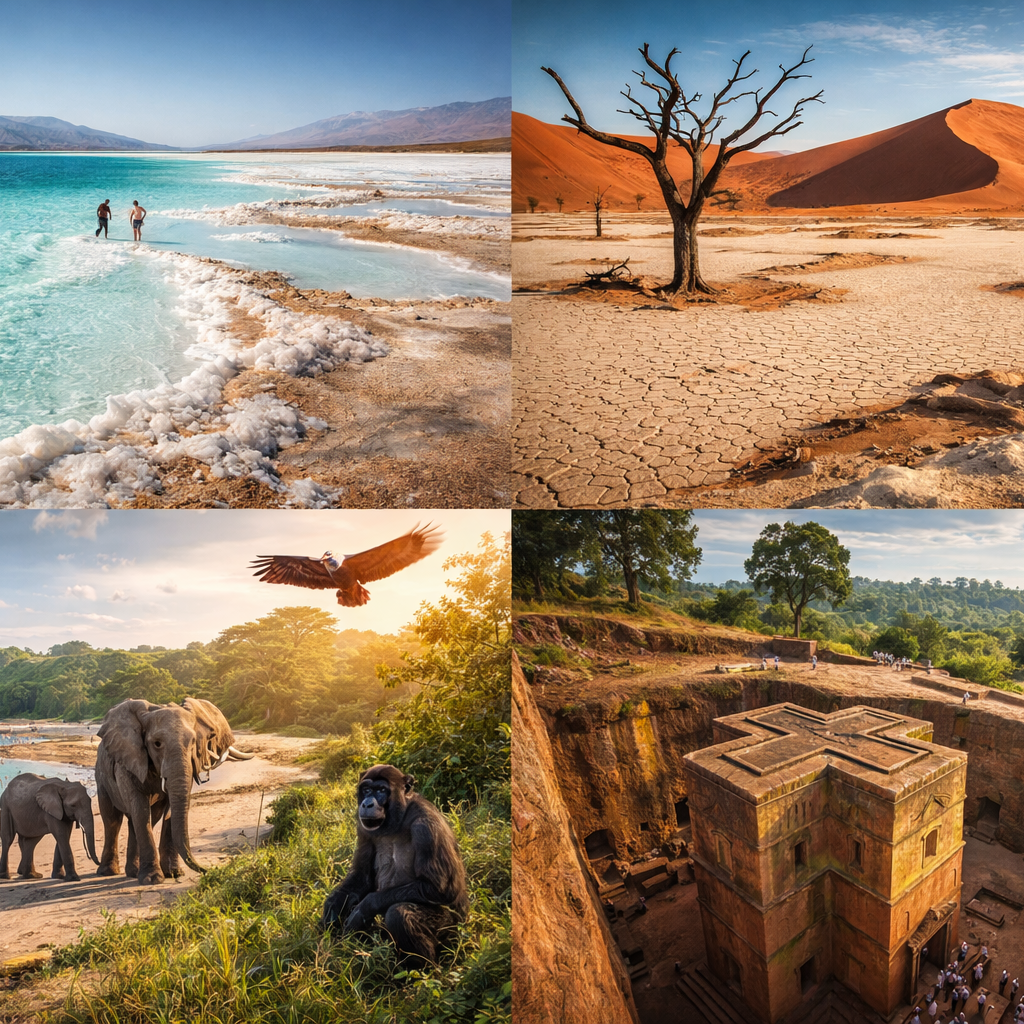
Lake Assal sits approximately 155 meters below sea level, making it the lowest point on the African continent. It is also among the saltiest bodies of water in the world, with salinity levels estimated at around 34–35%, comparable to the Dead Sea.
Why It Matters Geologically
The lake lies within the Afar Depression — one of the most tectonically active regions on Earth, where the African and Arabian plates are gradually pulling apart.
What to Expect
- Blindingly white salt flats
- Turquoise mineral-rich water
- Intense heat, often exceeding 40°C (104°F)
Practical Planning
- Best time to visit: November–February (cooler months)
- Access: 4×4 vehicle recommended; roads can be rough
- Facilities: Limited shade and no developed tourism infrastructure
- Safety: Travel with a licensed local guide
Ideal for: Geology enthusiasts, photographers, extreme landscape seekers
2. Loango National Park, Gabon
Where Rainforest Meets the Atlantic
Established in 2002 as part of Gabon’s national park system expansion, Loango protects coastal rainforest, lagoons, savannah, and marine environments in one ecosystem.
Ecological Significance
- Forest elephants
- Western lowland gorillas
- Seasonal humpback whale migrations offshore
- Leatherback turtle nesting beaches
Gabon is considered one of Central Africa’s conservation success stories due to its protected area network covering roughly 11% of its territory.
What Makes It Different
Unlike high-vehicle safari circuits in East Africa, visitor density remains relatively low, allowing for walking safaris and boat exploration.
Practical Planning
- Best time: June–September (dry season wildlife viewing)
- Access: International flight to Libreville, domestic connection required
- Cost level: High (remote logistics)
- Travel style: Organized eco-lodge or guided expedition
Ideal for: Experienced safari travelers seeking a less commercial wildlife experience
3. Bazaruto Archipelago, Mozambique
A Marine Conservation Area
The Bazaruto Archipelago is protected as a national park and marine reserve. It is one of the few remaining habitats of the endangered dugong in the western Indian Ocean.
Environmental Importance
The coral reefs support diverse marine life, and conservation efforts focus on sustainable fishing and habitat protection.
What to Expect
- Clear, warm Indian Ocean waters
- Traditional dhow sailing excursions
- Limited high-density resort development
Practical Planning
- Best time: May–October (dry season)
- Access: Flight to Vilanculos, boat transfer required
- Budget: Mid to high range
- Activities: Diving, snorkeling, marine safaris
Ideal for: Eco-conscious travelers, divers, honeymooners seeking privacy
4. Simien Mountains National Park, Ethiopia
UNESCO-Recognized Highlands
Designated a UNESCO World Heritage Site in 1978, the Simien Mountains are known for dramatic escarpments and endemic wildlife.
Conservation Importance
- Ethiopian wolf (fewer than 500 remain globally)
- Walia ibex (endemic mountain goat species)
- Gelada monkeys
Trekking Experience
The park offers multi-day trekking routes with panoramic highland scenery reaching elevations above 4,500 meters.
Practical Planning
- Best time: October–March (dry season)
- Permit required: Yes, through park authorities
- Physical demand: Moderate to strenuous
- Altitude consideration: Acclimatization recommended
Ideal for: Adventure trekkers, wildlife conservation travelers
5. Sossusvlei, Namibia
Iconic Dunes in the Namib Desert
Located within Namib-Naukluft National Park, Sossusvlei features some of the tallest sand dunes on Earth, with several rising over 300 meters.
Why It’s Photographically Important
The red iron-rich dunes contrast sharply with white clay pans such as Deadvlei, creating globally recognized desert imagery.
Practical Planning
- Best time: May–September (cooler mornings)
- Access: Self-drive popular; 4×4 required for final stretch
- Entry timing: Gates open at sunrise — early arrival essential
- Accommodation: Desert lodges or camping
Ideal for: Landscape photographers, self-drive travelers
6. Lalibela, Ethiopia
Medieval Rock-Hewn Churches
Lalibela is home to 11 monolithic churches carved directly from volcanic rock during the 12th–13th centuries under King Lalibela.
It is recognized as a UNESCO World Heritage Site.
Cultural Significance
These churches remain active places of worship and pilgrimage within Ethiopian Orthodox Christianity.
Practical Planning
- Best time: October–March
- Major event: Ethiopian Christmas (January 7)
- Respect: Modest dress required
- Access: Domestic flight from Addis Ababa
Ideal for: Cultural travelers, history enthusiasts
7. Nyika National Park, Malawi
Highland Ecosystem
Nyika differs from traditional safari landscapes. Its rolling grasslands resemble East African moorlands more than savannah plains.
Wildlife & Ecology
- Roan antelope
- Over 400 bird species recorded
- Seasonal wildflower blooms
Practical Planning
- Best time: May–October
- Access: 4×4 recommended
- Accommodation: Basic lodges and camps
- Visitor numbers: Significantly lower than major safari hubs
Ideal for: Scenic road-trippers, birdwatchers, quiet safari seekers
8. Ouadane (Ksour of Ouadane), Mauritania
Trans-Saharan Trade Heritage
Ouadane is part of the UNESCO-listed “Ancient Ksour of Ouadane, Chinguetti, Tichitt and Oualata,” representing medieval Saharan trade settlements.
Historical Importance
These fortified towns were key stops along caravan routes connecting sub-Saharan Africa to North Africa.
Practical Planning
- Access: Remote; guided desert expedition required
- Climate: Extremely hot summers
- Infrastructure: Minimal tourism facilities
Ideal for: Cultural historians, expedition travelers
Responsible Travel Considerations
When visiting remote African destinations:
- Verify visa requirements through official government portals
- Purchase comprehensive travel insurance
- Hire licensed local guides where required
- Respect cultural and religious practices
- Minimize environmental impact
Avoid unauthorized wildlife interaction or unregulated tour operators.
Final Perspective: Why These Destinations Matter
Many of Africa’s lesser-known destinations are not underdeveloped — they are under-promoted. Their ecological and cultural value often exceeds their global recognition.
Travelers who venture beyond the most marketed routes frequently find:
- More meaningful human connections
- Stronger conservation awareness
- Greater landscape diversity
- Lower visitor density
Exploring responsibly allows these destinations to benefit from tourism without replicating the pressures seen elsewhere.
For experienced travelers willing to plan carefully, these places offer some of the most authentic journeys on the continent.