
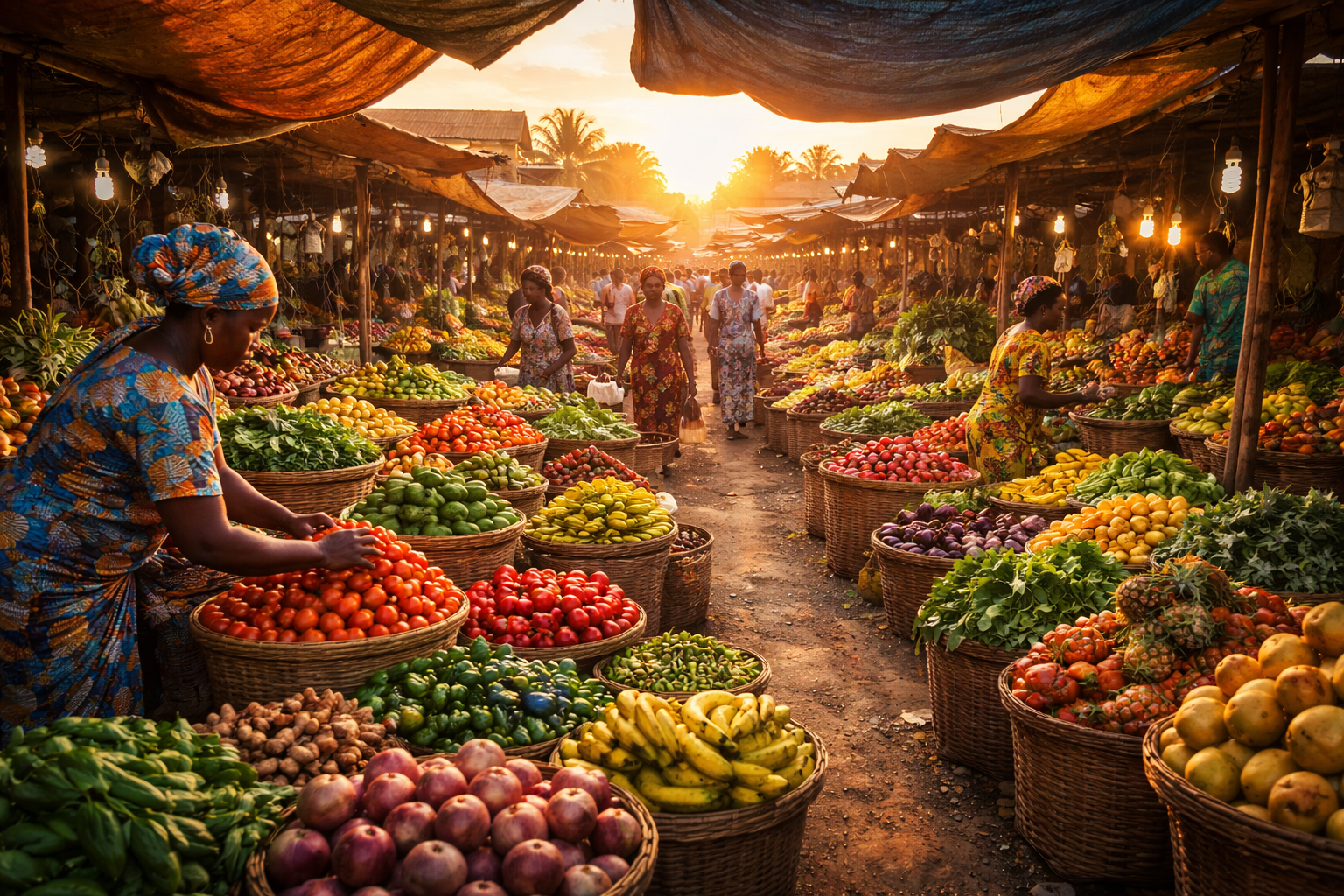
At 6:15 a.m. in Accra’s Makola Market, the air already carries the scent of fresh pineapples and ground pepper. Vendors move quickly, arranging tomatoes into neat pyramids while calling greetings across narrow walkways. A woman beside me laughs as she negotiates the price of smoked fish, tapping her scale to prove its accuracy. By sunrise, the market is fully alive. An African open-air market is more than a place to buy food or household goods. It is an economic engine, a cultural archive, and a social meeting ground. Across cities such as Accra, Lagos, Nairobi, and Dakar, these markets remain central to daily life — not only culturally, but economically. This article explores what a typical day looks like inside an African open-air market, why these markets remain vital, and what research reveals about their economic and social impact. Early Morning: The Market Comes to Life In many major cities, traders begin setting up before dawn. During visits to markets in West Africa, I observed vendors transporting goods by wheelbarrow, taxi, and small trucks — often arriving directly from rural farming communities. Stalls are typically constructed from simple materials: wooden tables, metal frames, tarpaulins, and woven mats. Produce is carefully arranged to attract buyers. The visual presentation is deliberate — bright peppers beside green okra, ripe mangoes stacked high to signal freshness. Many fresh products arrive within hours of harvest. According to the Food and Agriculture Organization (FAO), shorter supply chains in traditional markets can reduce post-harvest losses and support smallholder farmers when infrastructure allows. What You’ll Find in Most Open-Air Markets Although each market reflects local culture and geography, common goods include: In coastal cities like Dakar or Lagos, fish sections are especially active in the morning. Inland markets may emphasize grains, legumes, and root crops. A Marketplace of Fresh Produce — and Economic Significance Fresh produce sections are often the busiest areas. Tomatoes, onions, okra, leafy greens, plantains, cassava, and yams are stacked in colorful displays. Seasonal fruits fill the air with fragrance. Beyond aesthetics, these markets serve a crucial economic function. According to the World Bank, informal employment accounts for over 80% of total employment in many Sub-Saharan African countries. Open-air markets are a major component of this informal economy. These markets: In practical terms, when you buy tomatoes from a market vendor, you may be supporting a chain that includes a rural farmer, a transporter, a wholesaler, and a retail trader — all operating within a local economic ecosystem. The Soundscape: Negotiation and Social Bonds By mid-morning, the soundscape becomes layered and rhythmic. Vendors call out prices. Buyers compare options. Bargaining — often friendly and expected — becomes part of the exchange. During one visit, I watched a regular customer greet a pepper seller by name. They discussed family updates before negotiating price. The interaction was not transactional alone; it reflected trust built over years. This social dimension matters. According to research supported by the UN-Habitat, traditional markets in developing cities often function as social infrastructure — spaces where information, trust, and community relationships are reinforced. The Role of Women in Open-Air Markets In many African countries, women dominate food retail trading. Market visits in Ghana and Nigeria reveal rows of women managing stalls, handling accounts, and coordinating supply networks. Data from UN Women indicates that women represent a significant share of informal cross-border and market traders in Africa, often supporting entire households through small-scale commerce. Market trading offers: Women-led trader associations frequently manage dispute resolution, sanitation coordination, and cooperative savings schemes. Street Food: The Midday Pause By noon, food vendors become central. Charcoal grills sizzle with skewered meat. Large pots of rice and stew simmer nearby. During my visits, market workers often paused briefly for lunch — eating quickly before returning to their stalls. Meals are typically affordable, making them accessible to traders and shoppers alike. Street food sales are not merely cultural — they are economic. The FAO notes that informal food vending is a major source of urban employment in developing countries. Midday Peak and Flow Management Late morning to early afternoon is peak trading time. Office workers stop by during lunch breaks. Parents purchase ingredients for evening meals. Despite crowded walkways, markets often function with an informal but effective system of movement. Experienced shoppers navigate efficiently. Vendors weigh produce rapidly using mechanical or digital scales. While markets are vibrant, infrastructure challenges remain. Limited cold storage, drainage, or roofing can affect operations — particularly during heavy rains or extreme heat. Economic Impact: The Informal Sector Backbone Open-air markets are essential components of Africa’s informal sector. According to the African Development Bank, small and informal enterprises make up a substantial share of employment and economic activity across the continent. Markets contribute to: For many first-time entrepreneurs, opening a small market stall requires significantly less capital than renting a formal retail space. Social and Cultural Preservation Markets preserve cultural practices in visible ways: Tailors often operate within or near textile sections, transforming purchased fabric into custom garments within days. During holiday periods, markets expand with ceremonial goods and seasonal foods. These cycles align with cultural and religious calendars, reinforcing the market’s role as a community hub. Challenges Facing Open-Air Markets Despite resilience, open-air markets face modern pressures: The World Bank has noted that urban modernization efforts sometimes overlook informal traders, creating tension between redevelopment goals and livelihood protection. Efforts are underway in some cities to modernize sanitation, roofing, and storage while preserving traditional structures. Practical Tips for Visiting If visiting: 1. Go EarlyMorning offers fresher produce and more space to move. 2. Carry Small BillsThis simplifies transactions. 3. Bargain RespectfullyNegotiation is customary but should remain polite. 4. Ask Before Taking PhotosAlways request consent. 5. Stay AwareLike any crowded public space, keep belongings secure. Closing Hours: A Daily Reset By late afternoon, perishable goods may be discounted. Vendors pack unsold stock carefully — some transporting it home, others storing it for the next day. As the sun lowers, the noise fades gradually. What remains is