
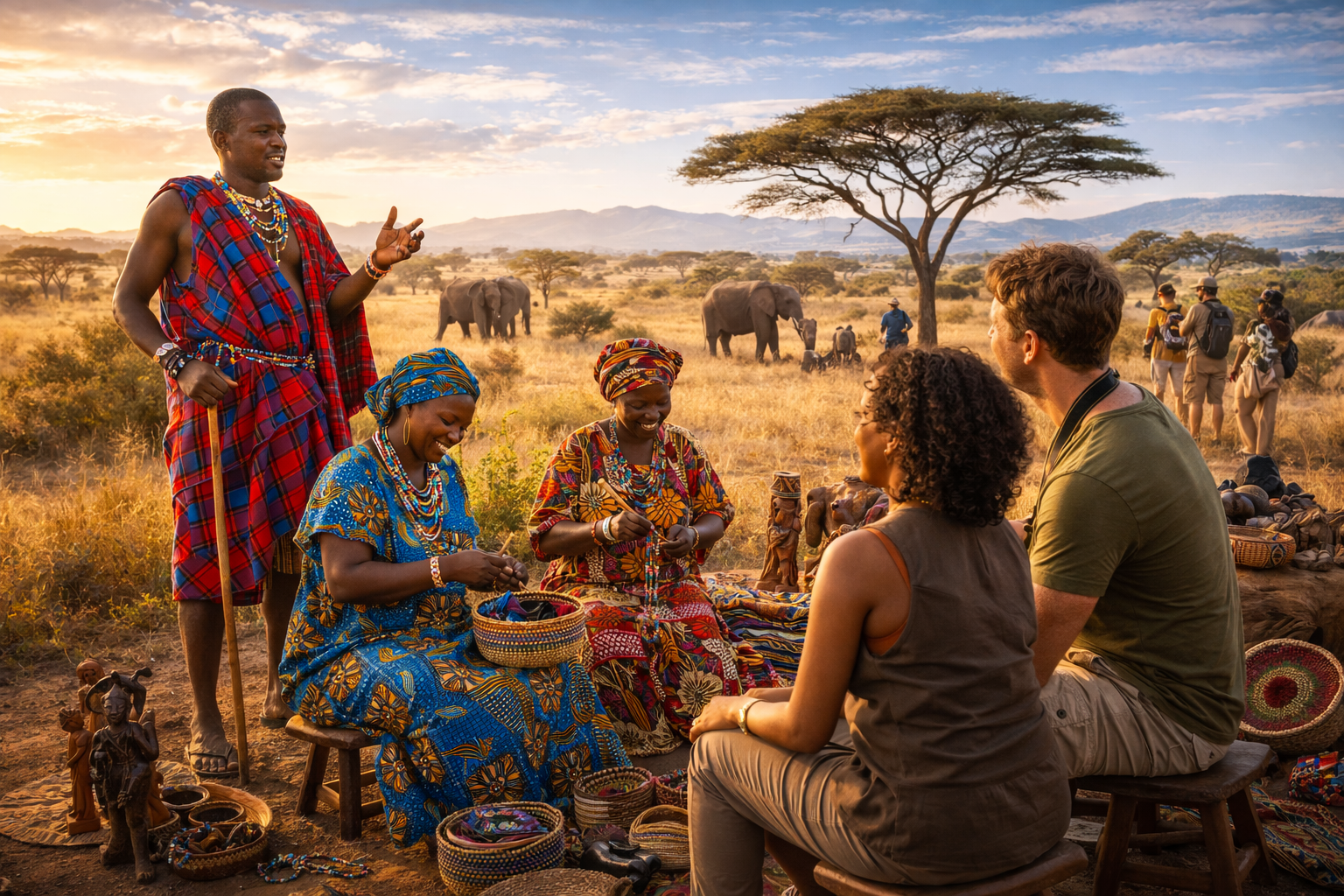
Cultural travel in Africa is entering a new era. For decades, international tourism narratives focused primarily on wildlife safaris and scenic landscapes. While those experiences remain vital, a growing shift is underway — one that centers on community leadership, heritage preservation, urban creativity, technology, and sustainable development. According to the World Tourism Organization (UNWTO), cultural tourism is one of the fastest-growing segments of global travel, accounting for an estimated 40% of international tourism flows. In Africa, this trend intersects with conservation, entrepreneurship, youth innovation, and diaspora engagement. The future of cultural travel in Africa is not simply about visiting places. It is about participating responsibly in living cultures, supporting community economies, and understanding how history, identity, and environment shape modern African societies. This guide explores how cultural tourism across Africa is evolving — from community conservancies and heritage cities to digital storytelling and creative industries — and what that means for travelers in the years ahead. 1. Community-Led Tourism: Redefining Who Benefits One of the most significant shifts in African tourism is the rise of community-owned and community-managed initiatives. The African Wildlife Foundation has documented how community conservancies across East and Southern Africa have increased wildlife populations while generating income for local households. In Kenya alone, community conservancies now protect millions of acres of land and create thousands of jobs linked to tourism. Firsthand Insight from a Community Conservancy During a visit to a community conservancy in northern Kenya, I attended an evening discussion led by a local ranger who explained how grazing rotations are coordinated between pastoralist families and wildlife migration corridors. What stood out was not just the conservation science, but the governance structure: elders, youth representatives, and women’s groups all had voting power in land-use decisions. This participatory model reflects a broader continental trend — tourism that is locally governed rather than externally imposed. Why This Matters The International Union for Conservation of Nature (IUCN) has repeatedly emphasized that conservation outcomes improve when local communities retain management authority and receive direct economic benefits. Cultural tourism now increasingly aligns with that principle. 2. Safari Beyond the Big Five: Cultural Context in Wildlife Travel The traditional “Big Five” safari model — lion, leopard, elephant, buffalo, rhinoceros — originated during colonial hunting eras. Today, ethical wildlife tourism is reframed around conservation and coexistence. Organizations such as the World Travel & Tourism Council highlight that wildlife tourism contributes billions of dollars annually to African economies. However, long-term sustainability depends on local participation. Human-Wildlife Coexistence in Practice In parts of Namibia, the Community-Based Natural Resource Management (CBNRM) program allows rural communities to manage wildlife and tourism enterprises directly. According to national reports, this model has led to wildlife recovery in previously depleted areas while generating revenue for schools and healthcare clinics. When travelers engage with these initiatives — through guided conservancy walks or ranger-led talks — they gain insight into: These are not abstract ideas. They are operational systems balancing ecological protection with human livelihoods. 3. Urban Cultural Renaissance: Africa’s Creative Cities The future of cultural travel is not confined to rural landscapes. African cities are becoming dynamic cultural destinations in their own right. In cities such as Lagos, Dakar, Nairobi, and Cape Town, travelers are increasingly drawn to: The global success of Afrobeats, Nollywood cinema, and African fashion weeks has reshaped international perceptions of the continent’s creative industries. Cultural travel now includes: This diversification strengthens tourism resilience and reduces dependence on wildlife-only models. 4. Heritage Preservation and UNESCO Recognition Africa is home to dozens of World Heritage Sites designated by the UNESCO. These sites range from ancient cities and archaeological landscapes to sacred forests and rock art. Examples include: Heritage tourism is evolving beyond passive observation. Increasingly, it incorporates: The emphasis is shifting from monument consumption to cultural continuity. 5. Technology and Digital Storytelling The next phase of cultural tourism in Africa involves technology. Young entrepreneurs are using: Digital storytelling allows communities to shape their own narratives rather than relying on external representations. The UNWTO has identified digital innovation as a critical driver of tourism competitiveness, particularly in emerging markets. For travelers, this means pre-trip engagement with culture — learning languages, histories, and traditions before arrival — enhancing respect and understanding on the ground. 6. Responsible Travel and Ethical Standards Trust in tourism depends on transparency and accountability. According to the Global Sustainable Tourism Council, sustainable tourism operators should demonstrate: When planning a culturally enriched trip, travelers should ask: These questions reflect a more informed and ethical traveler mindset. 7. Diaspora Tourism and Identity Travel Another emerging dimension is diaspora travel — individuals of African descent reconnecting with ancestral heritage. Countries such as Ghana have actively promoted heritage tourism initiatives that invite members of the African diaspora to explore historical sites tied to the transatlantic slave trade. This form of travel combines historical education, emotional connection, and cultural exchange. It represents tourism not just as leisure, but as identity exploration and reconciliation. 8. Challenges and Safeguards While cultural tourism offers significant benefits, risks remain: The IUCN and UNWTO both emphasize that tourism development must be participatory and evidence-based to avoid long-term harm. Balanced tourism planning includes: Trustworthiness in cultural tourism depends on acknowledging these risks rather than ignoring them. 9. The Economic and Social Ripple Effect The World Travel & Tourism Council reports that travel and tourism contribute substantially to GDP and employment across many African countries. Beyond direct jobs in hospitality, tourism supports: When responsibly structured, cultural tourism becomes a tool for inclusive development. Conclusion: A New Map for Cultural Travel in Africa The future of cultural travel in Africa is not defined by wildlife sightings alone. It is shaped by community governance, creative industries, digital innovation, heritage preservation, and ethical engagement. Travelers increasingly seek meaning alongside adventure. They want context alongside scenery. They want connection alongside photography. Africa’s tourism future lies in partnerships — between visitors and hosts, conservation and culture, tradition and innovation. Beyond the map of landscapes lies a richer terrain: living histories, evolving identities, and