
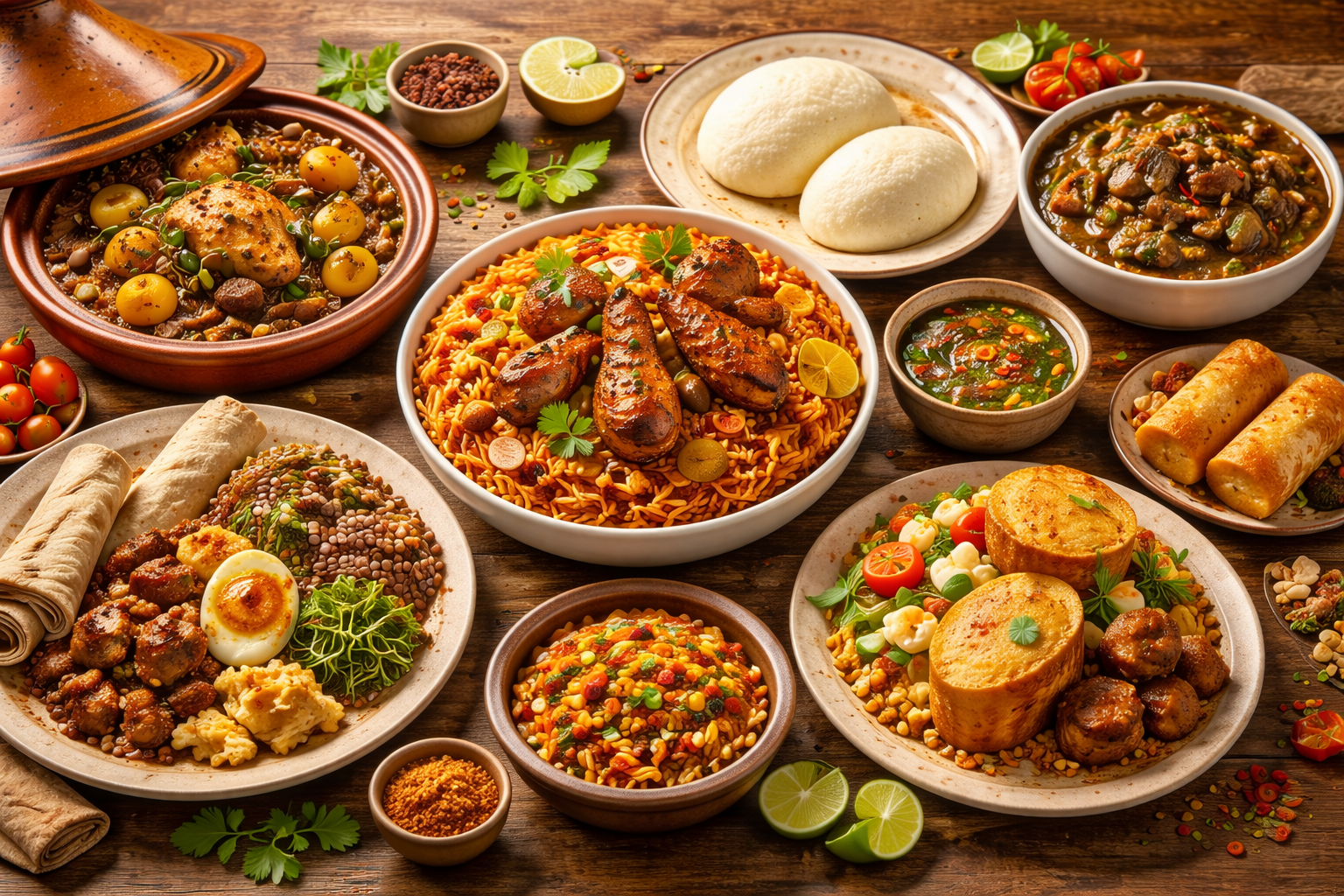
Africa is home to 54 countries, thousands of ethnic groups, and an extraordinary range of culinary traditions shaped by climate, agriculture, trade routes, and history. Traditional African meals are not a single cuisine but a collection of regional food cultures built around staple crops such as maize, cassava, millet, sorghum, rice, teff, and plantains.
Table of Contents
ToggleAcross many African societies, food is communal. Meals are often shared from a central dish, eaten by hand, and tied to celebrations, rites of passage, or everyday family life. Understanding traditional African meals means understanding geography, trade influence, and agricultural practices.
This guide explores well-known traditional dishes from West, East, Central, Southern, and North Africa — with historical context, ingredient insight, and practical notes for those who want to try them.
Understanding African Cuisine by Region
Because Africa is geographically vast, food traditions differ significantly:
West Africa
Known for tomato-based stews, peppers, rice dishes, cassava, yams, and bold spice blends. Coastal regions rely heavily on fish, while inland areas incorporate goat, beef, and poultry.
East Africa
Features fermented grains, maize, lentils, beans, and influences from Arab and Indian Ocean trade dating back centuries.
Central Africa
Uses cassava, plantains, leafy greens, freshwater fish, and groundnut (peanut) sauces.
Southern Africa
Centers around maize porridge, grilled meats, leafy vegetables, and colonial-era influences blended with indigenous traditions.
North Africa
Characterized by slow-cooked stews, couscous, olive oil, preserved lemons, and spice blends influenced by Amazigh (Berber), Arab, and Mediterranean traditions.
Popular Traditional African Meals
1. Jollof Rice (West Africa)
Jollof rice is one of the most recognized West African dishes, particularly associated with Nigeria, Ghana, and Senegal. Many food historians trace its origins to the Wolof people of Senegal, where an earlier rice dish called thieboudienne is believed to have influenced modern variations.
What It Is
A one-pot rice dish cooked in a tomato-pepper base with onions, spices, and broth. Each country prepares it differently — and debates over which version is best are famously passionate.
Key Ingredients
- Long-grain parboiled rice
- Tomatoes and red bell peppers
- Scotch bonnet or similar chili
- Onion, thyme, bay leaf
- Stock (chicken, beef, or vegetable)
Nutritional Insight
Rice provides carbohydrates for energy, while the tomato base contributes lycopene and vitamin C. When served with grilled chicken or fish, it becomes a balanced meal.
Practical Tip
For authentic flavor, allow the rice to cook long enough to form a lightly toasted layer at the bottom — often called “party rice” flavor in Nigeria.
2. Fufu and Soup (West & Central Africa)
Fufu is a starchy staple made by pounding boiled cassava, yam, or plantain into a smooth, elastic dough. It is served alongside richly seasoned soups such as egusi (melon seed), okra, or groundnut soup.
Cultural Context
In many households, fufu is eaten communally. Small portions are pinched, rolled, and dipped into soup — swallowing without chewing in some traditions.
Nutritional Insight
Cassava is calorie-dense and provides carbohydrates, while the accompanying soups often supply protein (fish, meat, legumes) and micronutrients from leafy greens.
Expert Clarification
Preparation methods vary widely. In Ghana, fermented cassava is often used. In Nigeria, yam-based fufu is common in some regions.
3. Injera and Wat (Ethiopia & Eritrea)
Injera is a fermented flatbread made primarily from teff flour. It serves as both plate and utensil for stews called wat.
Why It’s Unique
Teff is a tiny ancient grain native to the Horn of Africa. It is naturally gluten-free and notably high in iron and fiber compared to many other grains.
The Fermentation Process
Injera batter ferments for 2–3 days, creating its signature tangy flavor and sponge-like texture that absorbs stews.
Cultural Significance
Meals are often served on a large shared tray lined with injera, emphasizing hospitality and communal dining.
4. Sadza / Ugali / Nsima (Southern & East Africa)
Sadza is a thick maize porridge central to meals in Zimbabwe. Similar versions include ugali in Kenya and Tanzania, and nsima in Malawi.
What It Is
Maize meal cooked with water until thick and firm enough to scoop.
How It’s Served
Typically paired with:
- Leafy greens (such as rape or collard greens)
- Meat stews
- Groundnut sauces
Clarification
While sometimes described as eaten “daily,” maize porridge is a staple in many households but not literally every meal. Dietary patterns vary by region and income level.
5. Tagine (North Africa)
Tagine refers both to a slow-cooked stew and the conical clay pot used to prepare it, especially in Morocco.
Key Features
- Slow simmering method
- Combination of savory spices (cumin, coriander) and sweet elements (apricots, dates)
- Often includes lamb or chicken
Cooking Insight
The conical lid allows steam to circulate and condense, keeping meat tender without excessive liquid.
Historical Influence
Tagine reflects Amazigh cooking traditions combined with Arab and Mediterranean spice trade influences.
6. Moi Moi (Nigeria)
Moin moin is a steamed pudding made from blended black-eyed peas, onions, and peppers.
Why It’s Significant
It provides plant-based protein and is often served during celebrations, church gatherings, and everyday meals.
Variations
Some versions include boiled eggs, fish, or corned beef.
Nutritional Insight
Black-eyed peas are rich in protein, fiber, and folate, making this dish nutrient-dense.
7. Chakalaka and Pap (South Africa)
Chakalaka is a spicy vegetable relish typically served with pap (maize porridge).
Origins
Believed to have developed in South African townships, chakalaka reflects urban culinary adaptation and creativity.
Typical Ingredients
- Tomatoes
- Onions
- Beans
- Chili
- Carrots
It is commonly served at braais (barbecues) alongside grilled meats.
Nutritional and Cultural Significance
Traditional African meals often combine:
- Complex carbohydrates (maize, rice, cassava, teff)
- Legumes (lentils, beans, peas)
- Vegetables and leafy greens
- Animal protein (where accessible)
This pattern aligns with balanced dietary principles when portion sizes and preparation methods are considered. However, like all cuisines, nutritional value depends on ingredients, cooking methods, and frequency of consumption.
Culturally, shared meals reinforce social bonds. Hospitality is deeply embedded in many African traditions, where offering food symbolizes respect and community.
How to Try Traditional African Meals at Home
If you are new to African cooking:
Start With:
- Jollof rice (requires common pantry ingredients)
- Moi Moi (if you have access to black-eyed peas)
- Tagine (if you enjoy slow-cooked stews)
Ingredient Substitutions
- Teff flour can be found in specialty stores or substituted with a teff blend.
- Scotch bonnet peppers can be replaced with habanero for similar heat.
- Maize meal is widely available in international grocery stores.
Cooking Tip
Authentic flavor often comes from patience — slow simmering stews and allowing spices to bloom in oil enhances depth.
Final Thoughts
Traditional African meals are deeply rooted in agriculture, trade history, and communal living. From the fermented tang of injera to the bold tomato richness of Jollof rice, these dishes reflect centuries of adaptation and cultural exchange.
Exploring African cuisine is not just about trying new flavors — it is about understanding how geography, resilience, and shared traditions shape what ends up on the plate.
Whether you are dining at an African restaurant or cooking at home, approaching these meals with cultural awareness and curiosity enriches the experience.