
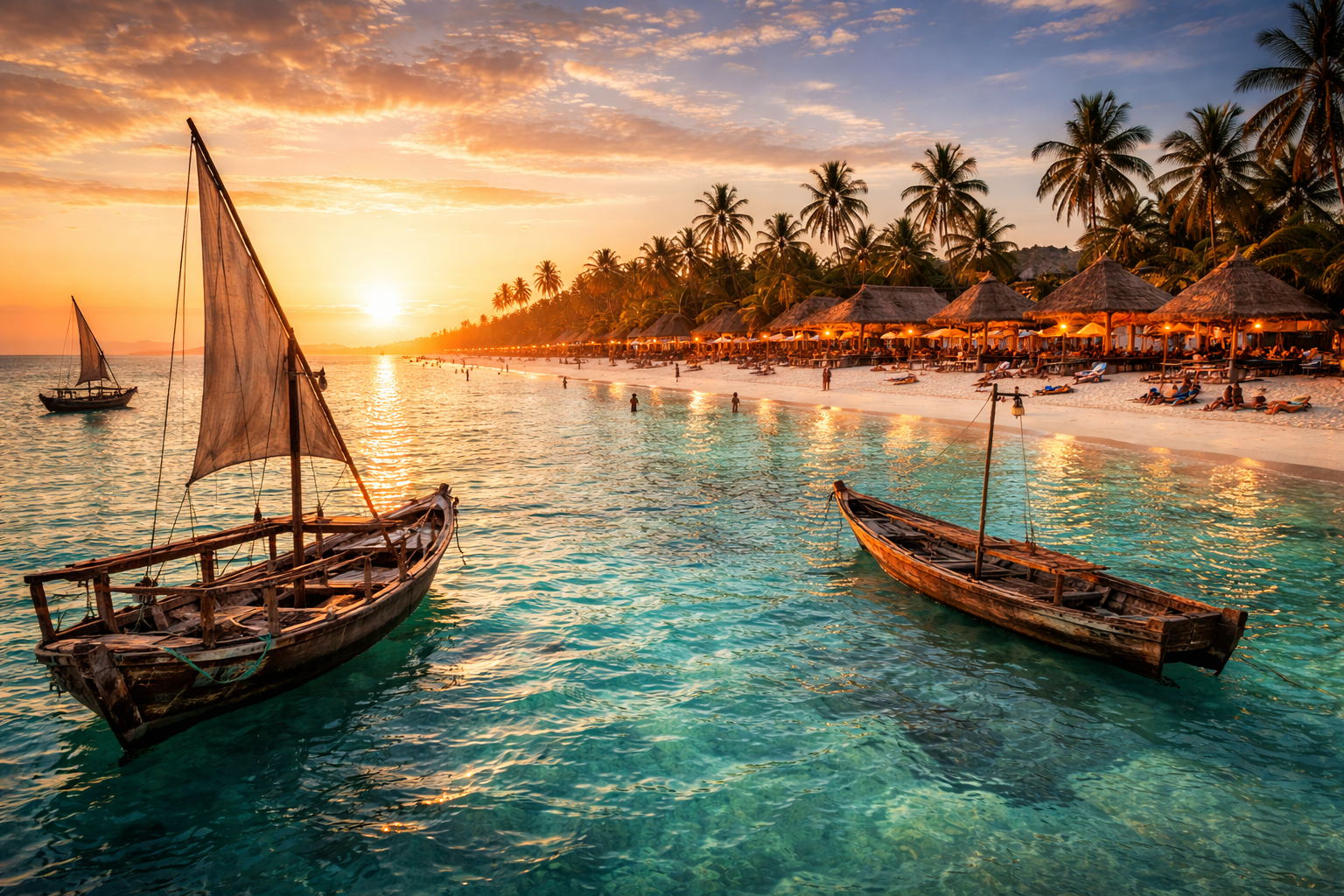
Zanzibar isn’t just a beach destination — it’s a layered cultural crossroads where Swahili, Arab, Indian, and European influences meet in daily life. After spending time across the island — from the tidal flats of Paje to sunset in Nungwi and evenings wandering Stone Town — this guide combines firsthand observations with practical, verified planning advice to help you travel confidently.
Table of Contents
ToggleZanzibar is a semi-autonomous archipelago of Tanzania in the Indian Ocean. Most visitors arrive via Abeid Amani Karume International Airport (ZNZ) or by ferry from Dar es Salaam.
Why Visit Zanzibar?
What surprised me most about Zanzibar is how different each coastline feels:
- The north (Nungwi/Kendwa) has calm water and classic white-sand beaches.
- The southeast (Paje/Jambiani) is defined by dramatic tides and kite-surfing lagoons.
- Stone Town feels like stepping into a living museum of Swahili trade history.
You can relax on turquoise beaches in the morning and explore centuries-old alleyways by afternoon.
The Best Beaches in Zanzibar (With Real Differences Explained)
📍 Nungwi Beach – Best for Swimming Anytime
Located on the northern tip of Unguja Island, Nungwi has the calmest and most swimmable water on the island. Unlike the east coast, tides here don’t dramatically pull the ocean hundreds of meters away.
Firsthand insight: Even at mid-afternoon, I was able to swim comfortably without walking far out. The sunsets are direct and vivid — one of the few places on the island where the sun drops straight into the ocean.
Best for: Couples, first-time visitors, relaxed beach days
Downside: More developed and busier than other areas
📍 Kendwa Beach – Wide Sand & Quieter Vibes
Just south of Nungwi, Kendwa has a broader, less crowded shoreline.
The sand feels softer underfoot, and the open horizon makes sunset photography easier.
Best for: Honeymooners, families, travelers wanting space
Swimming: Excellent year-round
📍 Paje Beach – Kite Surfing & Tidal Drama
Paje, on the southeast coast, is very different.
Here, the tide can retreat dramatically — sometimes over 500 meters. During low tide, locals farm seaweed and visitors walk across shallow lagoons.
Firsthand insight: The exposed reef walks are fascinating, but swimming is best during high tide.
Best for: Digital nomads, kite surfers, budget travelers
Note: Check tide schedules before booking
Exploring Stone Town – A Living Swahili Heritage Site
Stone Town is the historical core of Zanzibar City and was designated a UNESCO World Heritage Site in 2000 for its cultural significance.
What It Actually Feels Like
Walking here is immersive:
- The call to prayer echoes between coral-stone buildings.
- Wooden doors carved with Arabic script line narrow alleys.
- The scent of cloves and cardamom drifts from market stalls.
You don’t just “see” history — you move through it.
🏛 House of Wonders
Built in 1883 by Sultan Barghash, this was once the tallest building in East Africa and the first in Zanzibar to have electricity.
Important update: The building has undergone structural restoration in recent years after partial collapse, so interior access may be limited. Always check current access before visiting.
🌅 Forodhani Gardens
Every evening, this waterfront park becomes a food market.
I tried:
- Grilled octopus skewers
- “Zanzibar pizza” (a stuffed, pan-fried crepe)
- Fresh sugarcane juice
Tip: Go around 6–7 PM for the best atmosphere.
The “Spice Island” Legacy
Zanzibar became a global spice hub under Omani rule in the 19th century. Cloves were especially significant economically.
On a guided spice farm tour, you’ll see:
- Clove trees
- Nutmeg pods split open
- Cinnamon bark harvested fresh
Firsthand insight: Tasting raw nutmeg fruit was unexpectedly sweet — not at all like the powdered version used in baking.
Choose licensed farms that explain sustainable cultivation practices.
Hidden Gems Worth Your Time
🌳 Jozani Chwaka Bay National Park
Zanzibar’s only national park protects mangrove forests and the endemic Zanzibar red colobus monkey.
The monkeys are habituated to humans but remain wild.
Tip: Visit early morning for fewer crowds and more wildlife activity.
🐢 Prison Island
A short boat ride from Stone Town, this island is home to giant Aldabra tortoises.
Note: Choose ethical operators that avoid overcrowding and allow animals space.
🍽 The Rock Restaurant Zanzibar
Built on a rock in the Indian Ocean, accessible by foot at low tide and boat at high tide.
Honest review: You go for the setting. The seafood is good, but the panoramic view is the real highlight.
Reservations recommended.
Practical Travel Planning (Updated & Verified)
Entry Requirements
Zanzibar follows Tanzania’s visa policy.
- Many nationalities can obtain a visa on arrival.
- Passport must be valid for at least 6 months.
- Yellow fever vaccination proof may be required if arriving from affected countries.
Always verify with your embassy before travel.
Best Time to Visit
Zanzibar has two main dry seasons:
- June–October (cooler, less humid)
- December–February (hotter but sunny)
Rainy seasons:
- March–May (long rains)
- November (short rains)
June–September is ideal for beach weather and wildlife.
Budget Breakdown (Per Day Estimate)
| Travel Style | Budget Range (USD) |
|---|---|
| Backpacker | $35–60 |
| Mid-range | $80–180 |
| Luxury | $250+ |
Taxi from airport to Nungwi: approx. $35–50
Spice tour: $15–25
Prison Island trip: $25–40
Prices fluctuate by season.
Getting Around
- Registered taxis (negotiate before departure)
- Dala-dala (local minibuses; very cheap but crowded)
- Private transfers via hotels
- Car rental (international permit required)
For safety and convenience, most travelers use registered taxis or organized tours.
Health & Safety
Zanzibar is generally considered safe for tourists, though petty theft can occur in busy areas.
Recommendations:
- Use hotel safes
- Avoid isolated beaches at night
- Stay hydrated
- Consult a travel clinic about malaria prevention
Travel insurance is strongly recommended.
Cultural Etiquette
Zanzibar has a predominantly Muslim population.
Outside beach resorts:
- Cover shoulders and knees
- Avoid public displays of affection
- Ask permission before photographing locals
Respectful dress is appreciated in towns and villages.
Sample 4-Day Itinerary
Day 1: Arrive, explore Stone Town, sunset at Forodhani
Day 2: Spice tour + Prison Island
Day 3: Transfer to Nungwi/Kendwa, beach & dhow cruise
Day 4: Snorkeling trip or Jozani Forest visit
Internet & Money
- Currency: Tanzanian Shilling (TZS)
- USD widely accepted (newer notes preferred)
- ATMs available in Stone Town and Nungwi
- SIM cards (Vodacom, Airtel) inexpensive at airport
Wi-Fi is improving but inconsistent outside major hotels.
Final Thoughts: What Makes Zanzibar Special
Zanzibar isn’t just about beaches.
It’s the blend of:
- Swahili culture
- Indian Ocean trade history
- Tidal ecosystems
- Laid-back island rhythm
From swimming at Nungwi at sunset to hearing the evening call to prayer in Stone Town, Zanzibar feels both peaceful and deeply storied.
If you plan carefully, respect local customs, and explore beyond the resort, Zanzibar becomes far more than a tropical getaway — it becomes a cultural experience layered with history and natural beauty.