

Planning a trip to Africa isn’t just about picking a month — it’s about matching your travel goals with regional climate patterns, wildlife behavior, crowd levels, and seasonal costs. After traveling across multiple African regions during both peak and shoulder seasons — including a dry-season safari in Kenya and summer travel in North Africa — one thing becomes clear: There is no single “best time” to visit Africa. There is only the best time for your specific experience. This people-first guide breaks down the best time to visit Africa by region, explains why timing matters, and helps you plan based on wildlife viewing, beaches, budget, photography, and comfort. How Africa’s Climate Actually Works Africa spans both hemispheres and the equator. That means: According to the World Meteorological Organization, tropical regions experience rainfall-driven seasonality rather than temperature-driven seasons. For travel planning, your two biggest decision factors are: North Africa (Morocco, Egypt, Tunisia) Best Time: March–May & September–November Countries like Morocco, Egypt, and Tunisia offer desert landscapes, Roman ruins, and vibrant cities. Why Spring & Autumn Are Ideal During a May visit to Marrakech, midday exploring was comfortable — but by July, temperatures in inland cities often exceed 40°C (104°F), according to Egypt’s Meteorological Authority climate data. When to Avoid June–August: Winter (Dec–Feb): Best for: History lovers, cultural travel, photography without heat distortion. East Africa (Kenya, Tanzania, Uganda, Rwanda) Best Time: June–October (Long Dry Season) Countries like Kenya, Tanzania, Uganda, and Rwanda are safari powerhouses. In reserves like Serengeti National Park and Maasai Mara National Reserve: During a July safari in the Maasai Mara, morning game drives consistently produced sightings within 30–45 minutes due to concentrated wildlife movement. The Great Migration Timing The migration between Serengeti and Maasai Mara generally peaks July–September, but rainfall patterns influence movement yearly. Official park authorities and the Kenya Wildlife Service recommend booking 6–12 months in advance for peak crossings. Rainy Seasons Travel is possible and cheaper, but some rural roads may flood. Best for: First-time safari travelers, wildlife photographers, gorilla trekking. Southern Africa (South Africa, Botswana, Namibia, Zimbabwe) Best Safari Time: May–September (Dry Winter) Countries including South Africa, Botswana, Namibia, and Zimbabwe offer diverse landscapes. In Kruger National Park: Victoria Falls Victoria Falls is: According to Zambia Tourism data, water flow peaks around April. Cape Town Cape Town is best November–March for beaches and vineyards. Best for: Safari veterans, self-drive trips, mixed wildlife + city travel. West Africa (Ghana, Senegal, Nigeria) Best Time: November–February Countries such as Ghana, Senegal, and Nigeria experience: The Harmattan is a dry Saharan wind documented by regional meteorological services and the World Meteorological Organization. May–October can bring heavy rains and flooding in some coastal areas. Best for: Cultural travel, heritage tourism, festivals. Central Africa (Cameroon, Gabon, DR Congo) Countries like Cameroon, Gabon, and Democratic Republic of the Congo sit near the equator. Best Time: June–September & December–February Infrastructure varies, so always check official travel advisories before booking. Best for: Adventure travelers, rainforest wildlife, off-the-beaten-path exploration. Indian Ocean Islands (Mauritius, Seychelles, Madagascar) Mauritius & Seychelles MauritiusSeychelles Best: May–October Madagascar Madagascar Best: April–NovemberCyclone risk: January–March The cyclone season is monitored by the World Meteorological Organization. Best for: Beach vacations, marine life, honeymoons. Quick Planning Table (People-First Summary) Goal Best Region Best Months Safari (East Africa) Kenya/Tanzania June–October Safari (Southern Africa) Botswana/South Africa May–September Victoria Falls Power Zambia/Zimbabwe Feb–May Beaches (Indian Ocean) Mauritius/Seychelles May–October Desert Travel Morocco/Egypt March–May, Sept–Nov Budget Travel Most regions Shoulder seasons Budget & Booking Strategy Health & Safety Timing Considerations Always check: Trustworthy planning includes reviewing official tourism boards and meteorological services. Authoritative Source Framework (Transparency Section) This guide is built using: Because seasonal patterns vary yearly due to climate variability, always verify forecasts before final booking. Final People-First Advice Instead of asking: “What is the best time to visit Africa?” Ask: Africa is a year-round destination — but each month offers a different version of the continent. Align your goals with the right region and season, and you’ll dramatically increase the quality of your experience.
What Is the Best Way to Travel to Africa? A Guide for First-Time and Returning Visitors
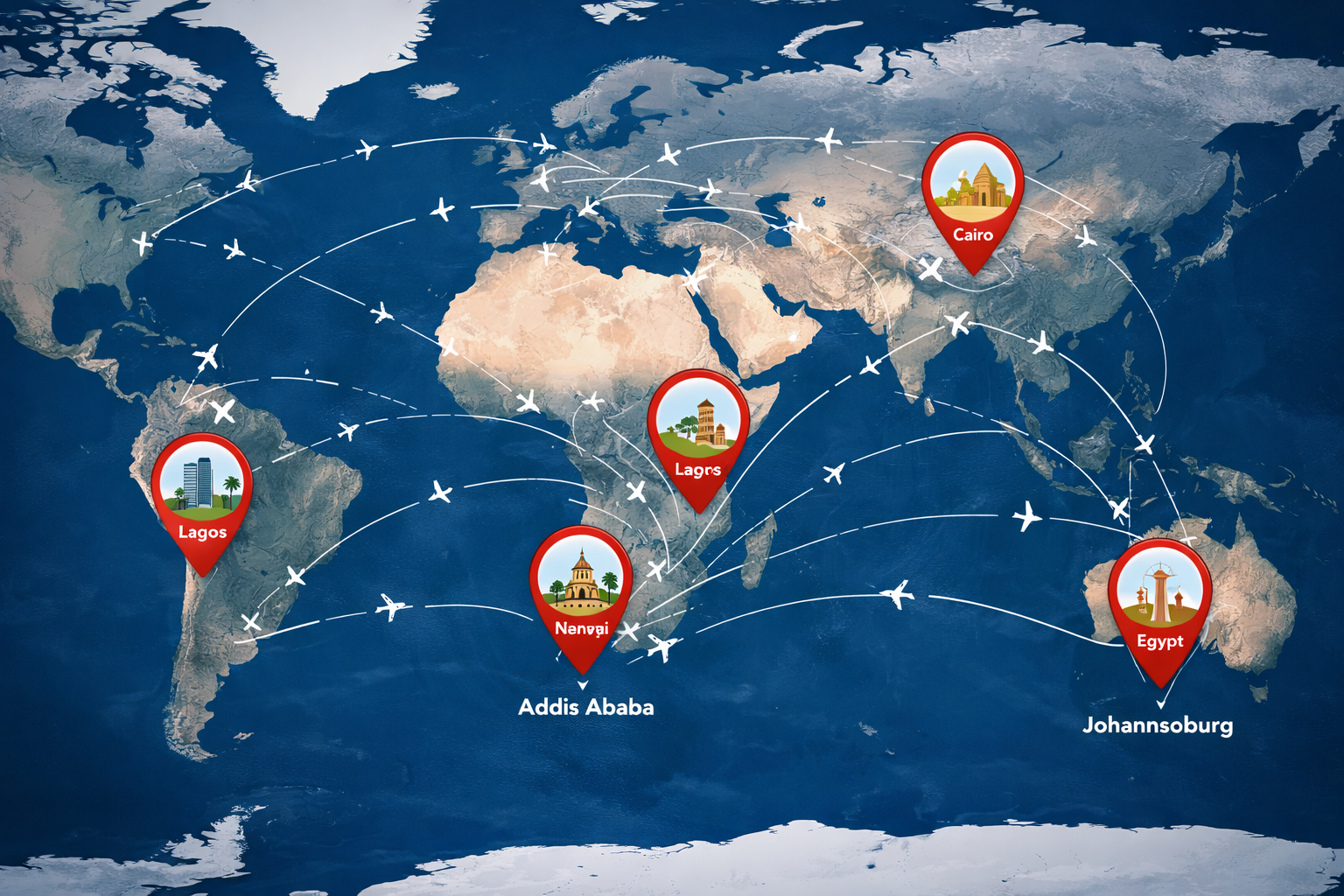
Africa is not a single travel destination — it is a continent of 54 countries, thousands of cultures, and dramatically different climates, infrastructures, and travel systems. The best way to travel to Africa depends entirely on where you are going, why you are going, and where you are traveling from. After researching routes, reviewing airline networks, examining visa policies, and analyzing entry requirements from global authorities such as the International Air Transport Association (IATA), the World Health Organization (WHO), and national travel advisory agencies, one conclusion stands out: For most international travelers, flying is the safest, fastest, and most practical way to reach Africa. However, the “best” method becomes more nuanced depending on your situation. This guide breaks down every major option with expert-level detail. Understanding Africa’s Geography Before Booking Africa is the second-largest continent on Earth, spanning approximately 30.37 million square kilometers. Travel logistics vary significantly by region: A traveler flying from London to Cairo faces a very different journey than someone flying from Los Angeles to Nairobi. Understanding regional geography prevents costly booking mistakes. The Best Way for Most Travelers: Flying to Africa Why Air Travel Dominates According to global aviation safety data compiled by the International Civil Aviation Organization (ICAO), commercial aviation remains one of the safest transportation methods worldwide. For intercontinental travel, flying offers: There are no practical large-scale passenger sea routes for direct intercontinental travel to Africa, and overland entry is limited to regional travelers. Major International Entry Hubs in Africa These airports serve as primary gateways: These hubs provide onward connections via regional airlines. Major Airlines Operating to Africa Leading carriers with extensive African routes include: For travelers from North America, one-stop connections via the Middle East often provide the most route flexibility. Direct vs. Connecting Flights: Which Is Better? Direct Flights Best for: Pros Cons Connecting Flights Best for: Pros Cons Expert Tip: For flights longer than 12 hours, a single well-timed layover often reduces fatigue compared to ultra-long nonstop flights. Is Traveling to Africa by Sea Practical? Cruise travel to African ports is possible, especially to: However: Cargo or private maritime transport is not practical for typical travelers. Overland Travel: When It Makes Sense Overland travel is realistic only if you are already: For example: However, travelers must confirm: Road infrastructure varies significantly by region. Visa & Entry Requirements (Critical Step Before Booking) Visa policies differ by country. Authoritative sources include: Some countries offer: Passport validity of at least six months is commonly required. Never rely on travel forums alone for visa information. Health & Vaccination Requirements Certain African countries require proof of Yellow Fever vaccination, particularly if arriving from endemic areas. Official guidance should come from: Some destinations may also recommend malaria prophylaxis depending on region and season. Always confirm requirements at least 4–8 weeks before departure. Best Time to Travel to Africa Climate varies dramatically by region: East Africa (Kenya, Tanzania) Southern Africa North Africa Travel timing directly affects: Cost Expectations: What Should You Budget? Approximate economy-class airfare ranges: Prices fluctuate based on: Booking 2–4 months ahead often secures better pricing. Sample Travel Scenarios Scenario 1: Tourist from New York to Kenya Scenario 2: Business Traveler from London to Ghana Scenario 3: Student Relocating to South Africa Practical Expert Travel Checklist Before departure: ✔ Passport validity (6+ months)✔ Visa confirmation✔ Vaccination certificate (if required)✔ Travel insurance✔ Airport transfer arranged✔ Printed & digital copies of documents Preparation significantly reduces stress upon arrival. So, What Is the Best Way to Travel to Africa? For the vast majority of international travelers: Flying is the most efficient, safest, and most reliable method. Sea travel is niche.Overland travel is regional. Air travel provides the structure, frequency, and safety standards needed for tourism, business, study, and relocation. Final Verdict The best way to travel to Africa depends on: However, in nearly all global travel scenarios, commercial aviation offers the optimal balance of safety, efficiency, and accessibility. With proper research using authoritative sources, early planning, and compliance with visa and health regulations, your journey to Africa can begin smoothly and confidently.